Institute for Transport Studies (ITS)

Research Group: Safety and Technology

The Safety and New Technology group consists of a multidisciplinary team of psychologists, social scientists, physiologists, engineers, human factors experts and computer scientists. The main aims of the group are to improve the fundamental understanding of road users’ behaviour in their interactions with the road environment, the vehicle, infrastructure, traffic and information systems, in order to develop and assess new techniques for contributing to a safer, cleaner and more efficient transport network.

Driver Behaviour and Human Factors

ITS has extensive expertise and a long-established track record in studying driver behaviour, monitored in both laboratory settings and real-world field trials. The bulk of this work is strengthened by long term collaborations with European partners at various research institutes, universities and OEMs, as well as UK stakeholders at the Department for Transport, Commission for Integrated Transport, Transport for London, EPSRC and the Highways Agency. Successful and long standing collaborations also exist with other Schools and Faculties of the University of Leeds, including the School of Computing, Institute of Psychological Sciences and Faculty of Engineering, whilst new links on Transport and Health are being established with School of Health Care and St James’s University Hospital.

Observations of driver behaviour typically commence as a result of the desire to understand the impact of Information and Communication Technologies (ICT) on driver performance acceptance and response, due to emerging in-car systems and developments in road network infrastructure. The effect of technological innovation on driver and road safety is a particular focus of the research, with pioneering research on drivers’ attitude to, and use and acceptance of, Intelligent Speed Adaptation (ISA) contributing to a substantial part of the research conducted in this area during the past 15 years. Other notable examples include:

  • Creating metrics for assessment of driver distraction by in-vehicle technologies.
  • The influence of advanced driver assistance and information systems on human factors issues such as workload and situation awareness.
  • Evaluating the contribution of emerging in-car and infrastructure technologies to a cleaner and more efficient transport system.
  • Understanding driver behaviour in autonomous (dual-mode) vehicles.

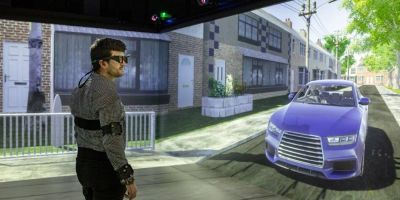
Studies using the University of Leeds Driving Simulator (UoLDS) are a particular strength, as they allow such investigations to be conducted in a safe and highly controlled setting. Complex and innovative scenarios can be created at low cost, within a very realistic driving environment. Such laboratory-based work is immensely beneficial, as it provides solutions to fundamental questions and problems before costly and time-consuming deployment in the real world. Examples of current and potential research in this area include:

  • Evaluating the effect of various speed reducing measures in rural and urban environments.
  • New engineering solutions for safer driving, such as reducing driver fatigue.
  • Examining the impact of changes in road signage and variable message signs on driver behaviour.
  • Modelling driver interaction with advanced driver assistance systems.
  • Assessing driver response to critical scenarios within a highly automated driving environment.
  • Improvements in vehicle systems and design.

The group is at the forefront of European research on large scale Field Operational Tests (FOTs) which investigate the reliability, robustness, acceptance and operation of intelligent vehicle systems, evaluating their contribution to a safer, cleaner and more efficient transport system of the future. Notable recent work in this area includes the groups’ pivotal role in producing a comprehensive handbook on the use of common methodologies for European FOTs, which is guiding research on current FOTs around Europe. Forthcoming research in this area is also in alignment with the European agenda on studies of driver behaviour within cooperative systems involving communications between infrastructure and vehicle (I2V), and from vehicle to vehicle (V2V).

Research on driver training and improvement schemes is also an area of expertise, with recent and planned research on the understanding of young and novice drivers’ behaviour, including an appreciation of the factors which contribute to their high rate of accidents. Eco-driving styles suited to modern engine, vehicle and driver assist systems engine technologies are also been studied. 
Data collection for these studies is supported by a range of tools and techniques, including qualitative data gathering via focus groups, in depth interviews, questionnaires and surveys. Quantitative analysis of vehicle based measurements, and observations of drivers’ physiological state, monitoring eye movements and heart rate also provide insight from another perspective in this research area.

Public attitudes

The core of the research in this area is dedicated to understanding attitude and behaviour of transport users. In particular, research focuses on eliciting attitudes and preferences of the UK and European public to various modes of transport, and their thoughts and priorities to transport related problems, programmes and initiatives. Examples include an understanding of public attitude and a comprehension of factors that contribute to road safety, transport users’ knowledge and view on simplicity and reliability of transport modes and services, and their attitude towards the contribution that transport makes to climate change and local air pollution. Large scale field trials and simulator based experiments are also used to monitor behaviour and study attitudes to new schemes. Theory-based studies are used to design questionnaires and experiments to test specific theories. Examples here include the applying the Theory of Planned Behaviour (TPB) to investigate applications in road safety, mode choice and car purchase.

For further information about the Safety and Technology Research Group and its activities, please contact Dr Natasha Merat